Podcasts
Conversations on process intelligence, the canonical model, and operating model oversight, in audio form.
Episodes feature AI-generated hosts discussing human-written IGX360 research.
-
Give Your Processes a Governed Home
Move process knowledge out of documents and people's heads into one governed system of record. This episode covers process truth, runtime evidence and the order that makes automation and AI land.
-
Put an Enterprise Process Foundation Under Your Automation
Local workflow, RPA and low-code automations can fit one enterprise picture. This episode covers process design, decision rights and runtime evidence, and where to start with the automations you already run.
-
A Governed Route From Process Model to Workflow and AI
Approved processes can drive how automated work runs. This episode covers runtime evidence, visible work status and choosing one governed process to make executable first, so AI agents inherit a route you can stand behind.
-
Turning Your Process Architecture into Everyday Answers
Your process repository already holds the answers leaders need. This episode covers how repository intelligence, gap detection and plain language access put those answers in everyone's hands, not only the specialists'.
-
Making Governance Shape What People Do
Policies, committee decisions and control frameworks say what should happen. This episode walks the seven-link chain from obligation to retained evidence, shows where governance can change front-line work, and explains how to prove implementation.
-
The Seven Links of Pharmaceutical Traceability
GMP, GDP, GCP, GLP and GVP duties cross quality, manufacturing, clinical operations, safety and external partners. This episode walks the seven links from obligation to process, owner, system, control, execution and retained evidence, and shows how to keep each one inspection-ready.
-
Turning Perfect Paperwork into Inspection Evidence
A medical device manufacturer can align every SOP and quality manual to FDA QMSR and ISO 13485, and evidence that each is followed. This episode traces the seven-link chain from obligation to process, owner, system, control, execution and retained evidence.
-
Making EU AI Act Compliance Audit-Ready
AI use spreads across functions, vendors and embedded tools faster than any single team can track it. This episode covers how one connected inventory, tied to risk classification and human oversight, makes EU AI Act duties operational at audit time.
-
Building One Evidence Chain for DORA
DORA duties are split across ICT risk, vendor management, incident response and audit, each holding a piece of the evidence chain. This episode covers how to connect obligation, process, owner, system, control, execution and retained evidence into one chain that supervisors and boards can follow.
-
Compliance by Design for Regulatory Change
New obligations arrive as PDFs, email chains and working groups. This episode covers how connected impact analysis traces each regulatory change to the processes, controls and evidence it touches, so implementation is accountable and evidenced.
-
Connecting Risk, Controls and Obligations
Risk, compliance, audit and process teams each keep their own register. This episode covers how a connected, process-centric risk model gives every team one view of controls, ownership and evidence.
-
Capturing Why Autonomous AI Makes Decisions
An autonomous agent acts inside a live workflow and the log records only that it succeeded. This episode covers how capturing why an agent decided turns execution into evidence and governed learning.
-
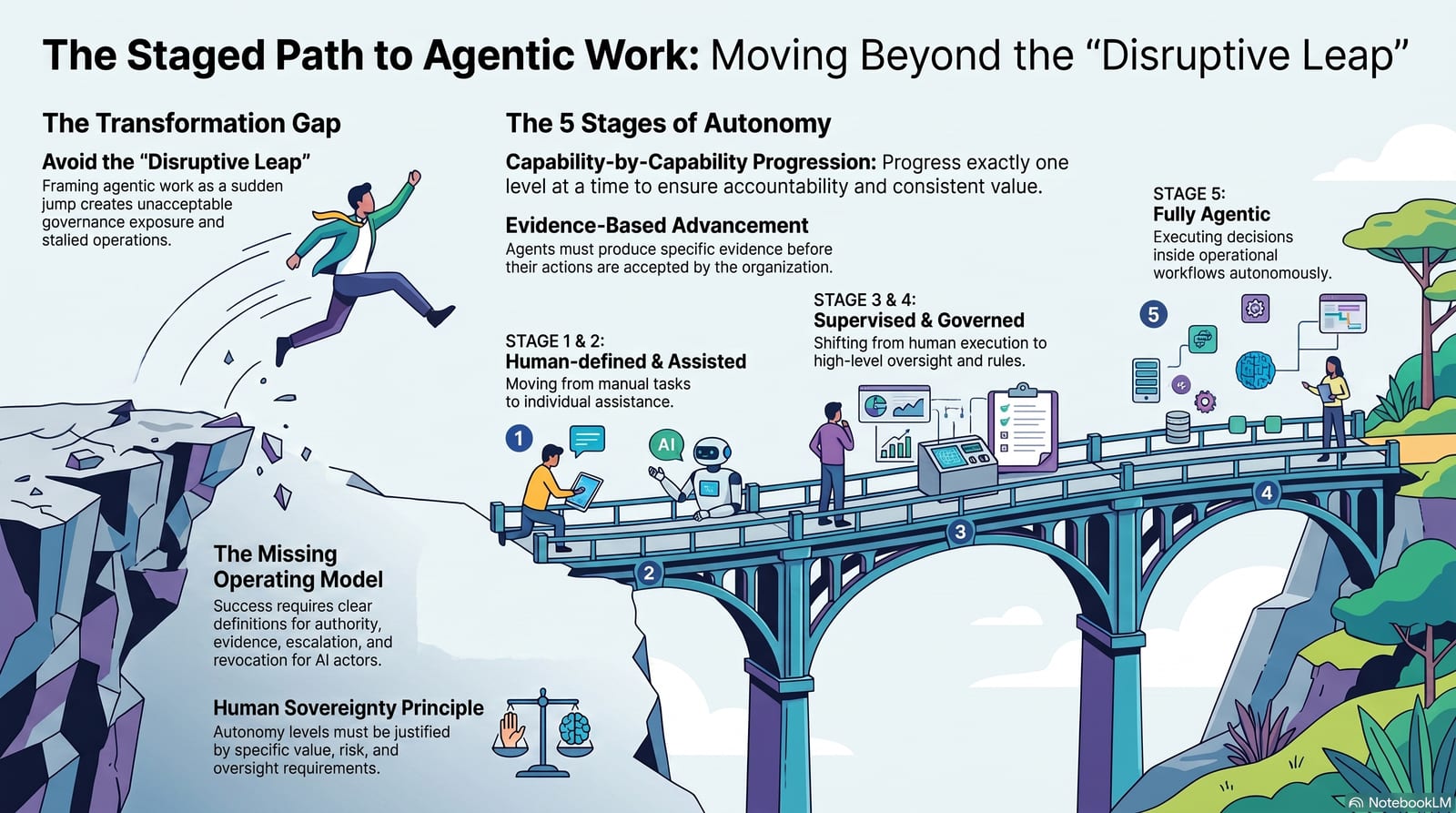
The Staircase To Fully Agentic Work
Leadership can name the destination for agentic work. This episode covers how a staged progression turns the move into controlled capability change, one capability at a time, with human gates throughout.
-
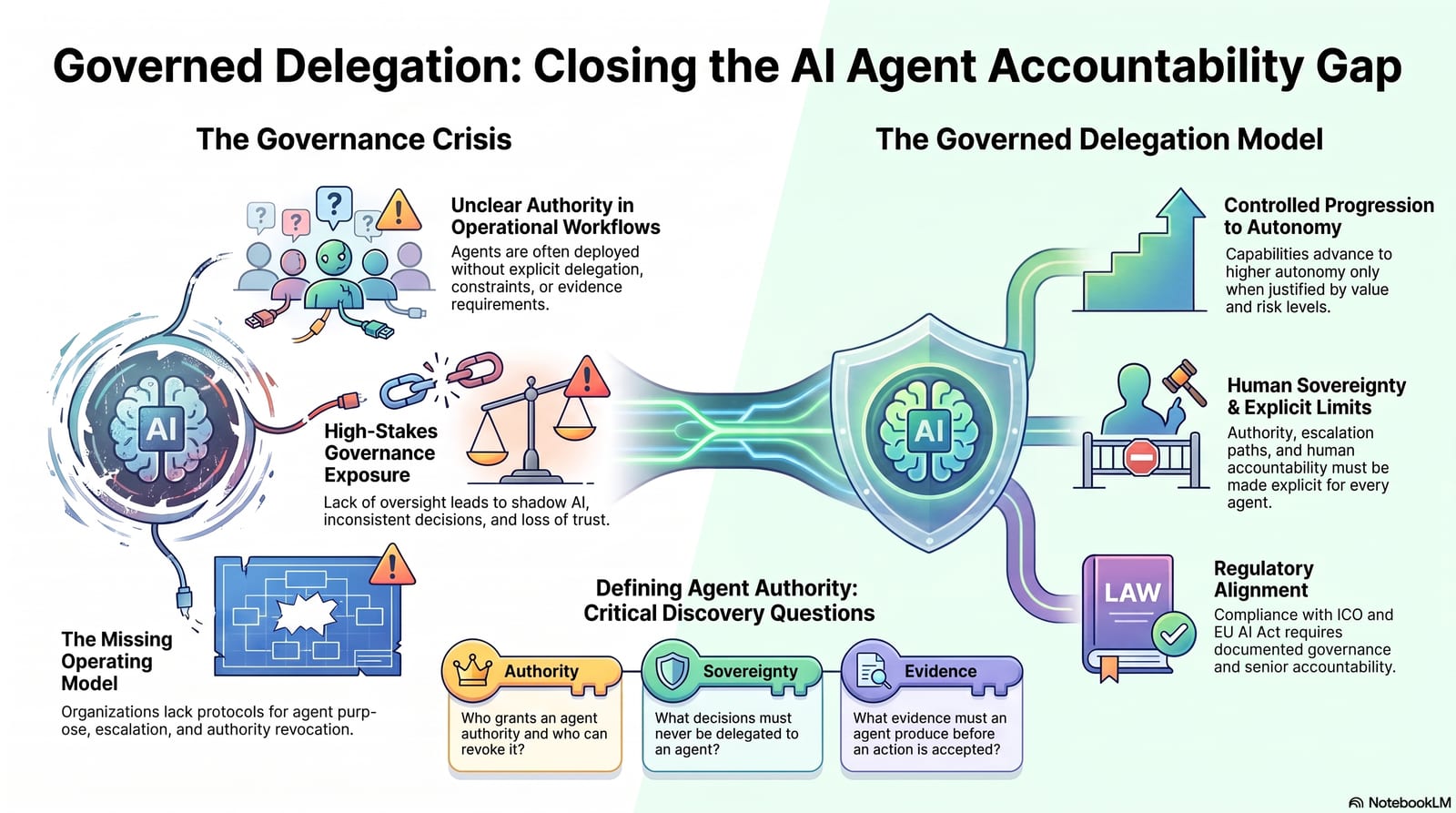
Making AI Agent Accountability Clear
An AI assistant that drafted refund emails last week is issuing them this week. This episode covers the shift from assistant to actor, why explicit authority, limits and evidence keep humans in control, and how to make delegation to an agent clear before it reaches operational work.
-
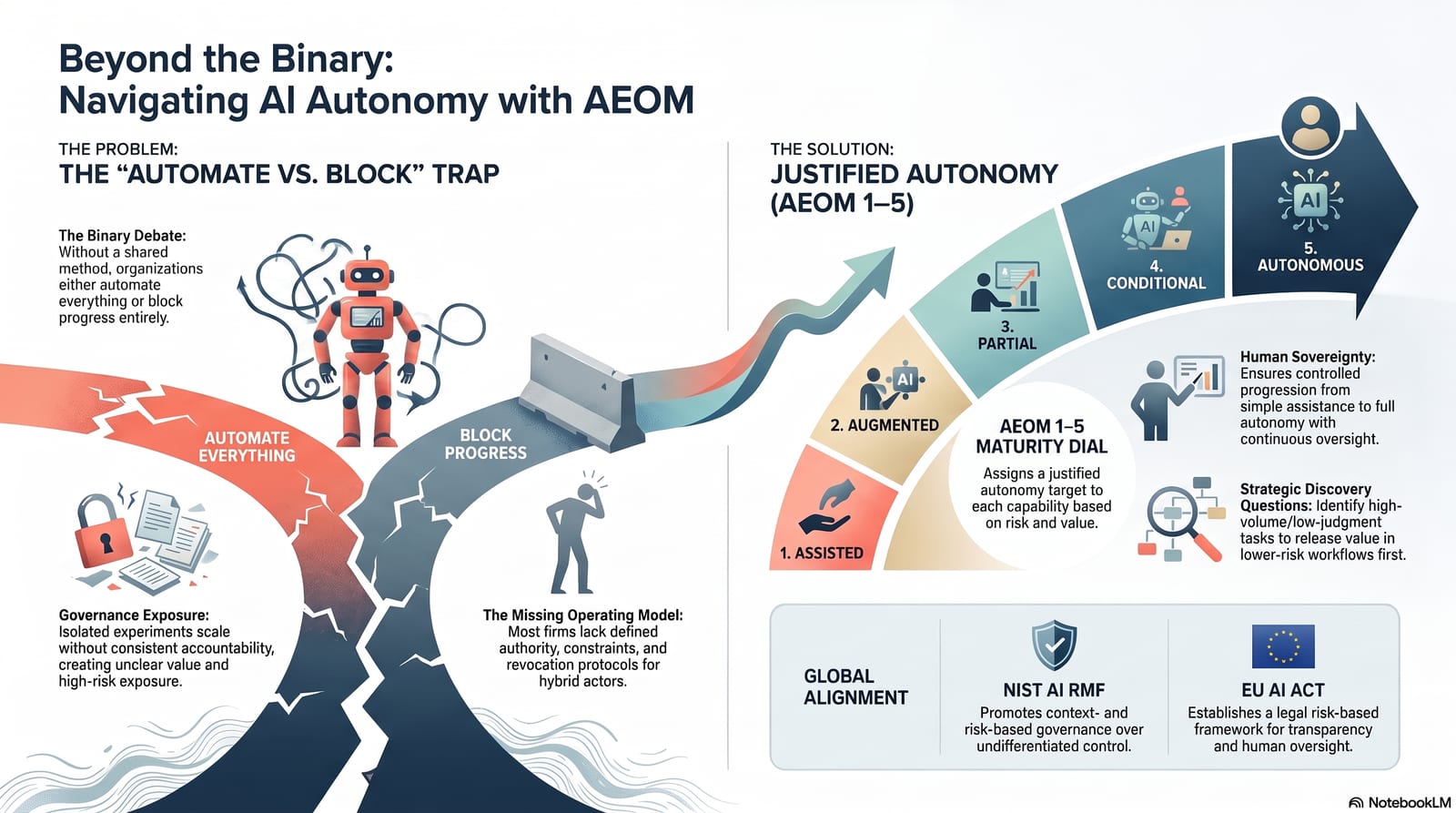
Deciding Where AI Agents Should Act
Autonomy works best when it is matched to capability. This episode covers a repeatable way to set a justified autonomy target for each capability, release low-risk value sooner, and keep a human gate where judgement and accountability matter.
-
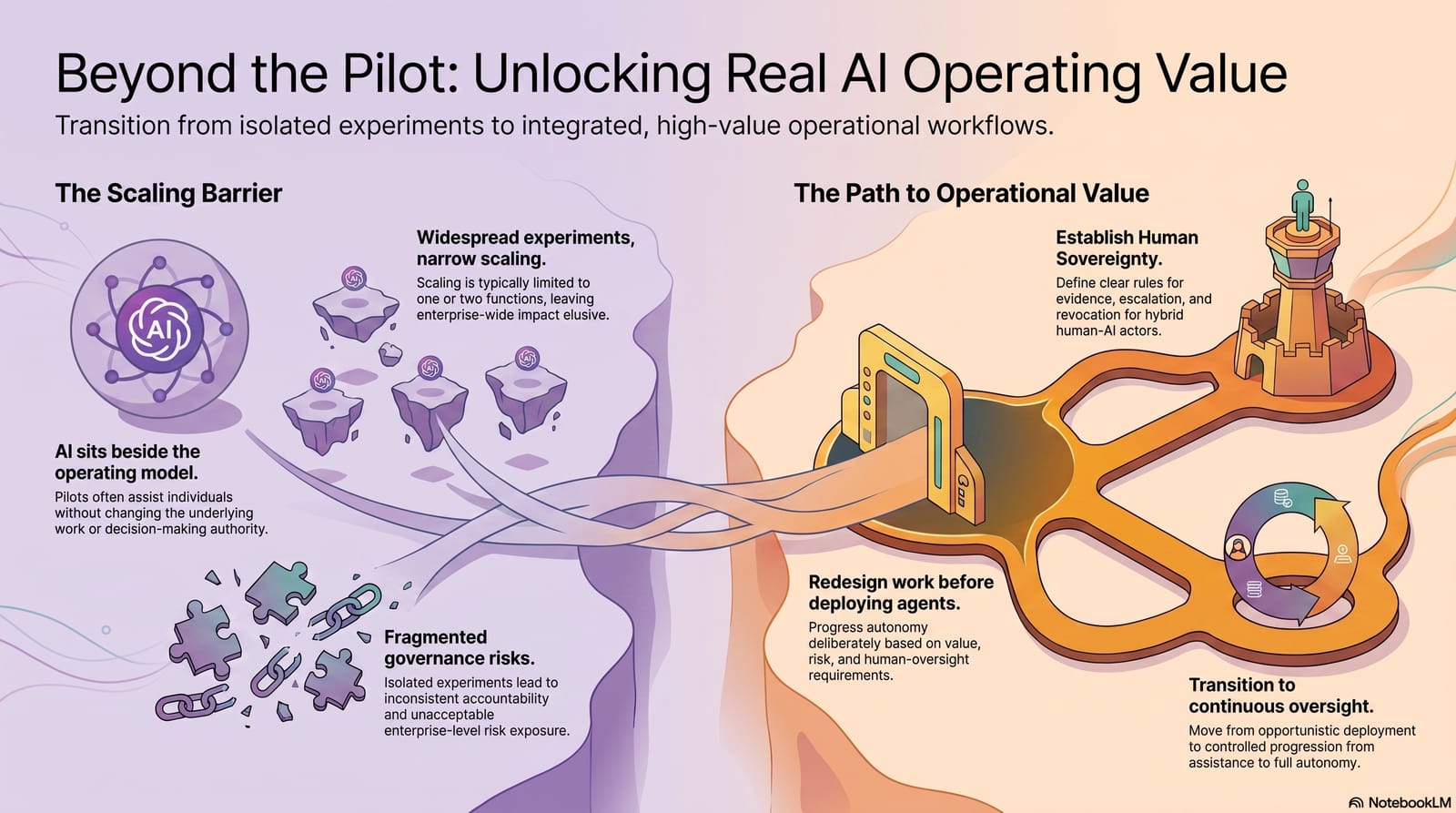
Turning AI Pilots into Operating Value
Billions go into enterprise AI assistants and agents, and the biggest gains come when the operating model changes with them. This episode covers how redesigning the work, and defining purpose, authority, constraints, evidence, escalation and revocation for every actor, turns pilots into operating value.
-
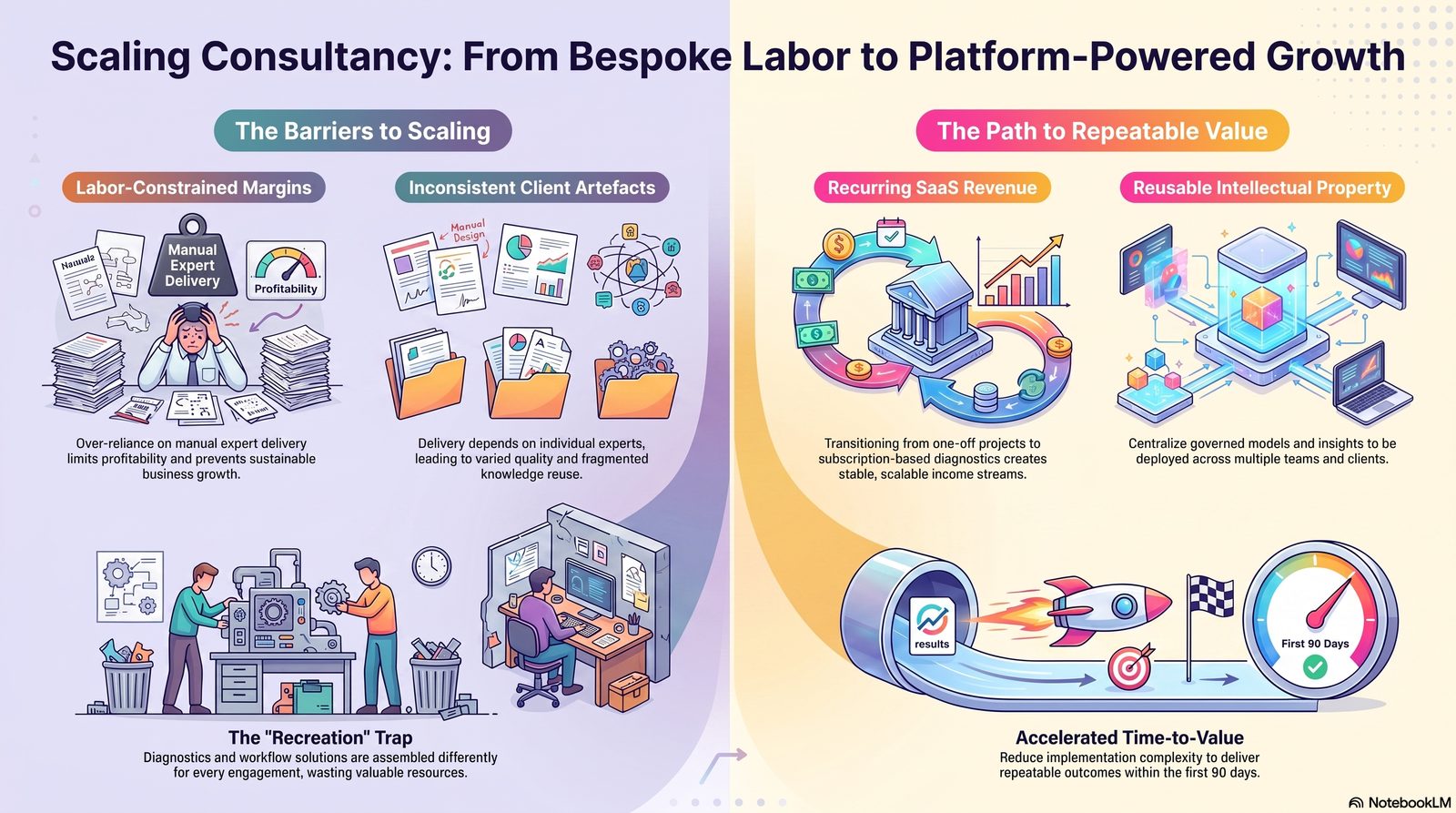
Turning Consulting Expertise into a Repeatable Platform
Consultancies that build diagnostics, models and reports once and reuse them tie margins to method, not billable hours. This episode covers how to productise expertise into a repeatable, governed platform when a firm needs process capability that scales.
-
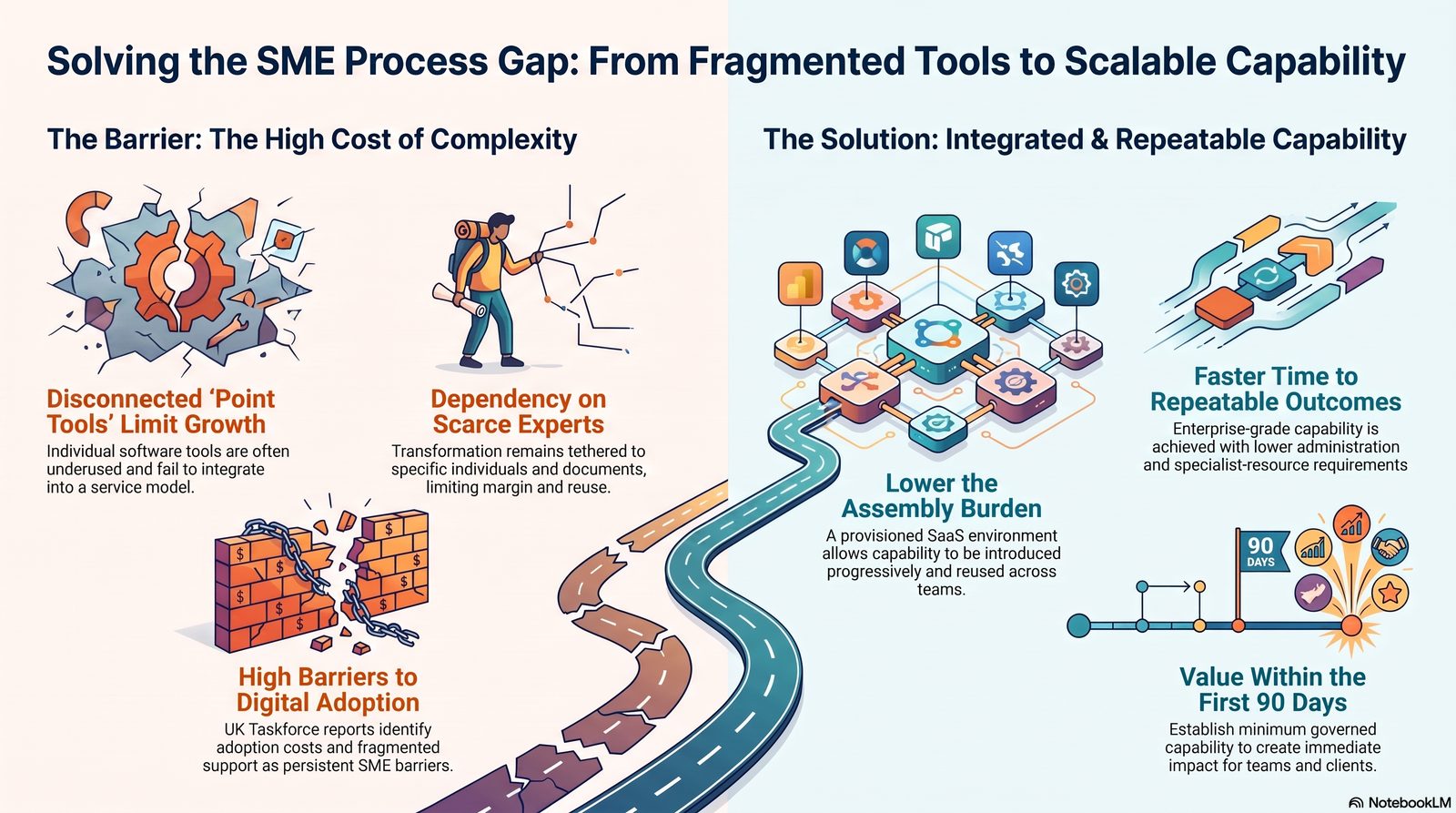
Building an Integrated Platform, Not a Stack of Point Tools
SMEs often buy point tools to solve one problem at a time. This episode covers how a provisioned, integrated SaaS platform connects data across systems, lowers the assembly burden and reduces dependence on a few scarce experts.
-
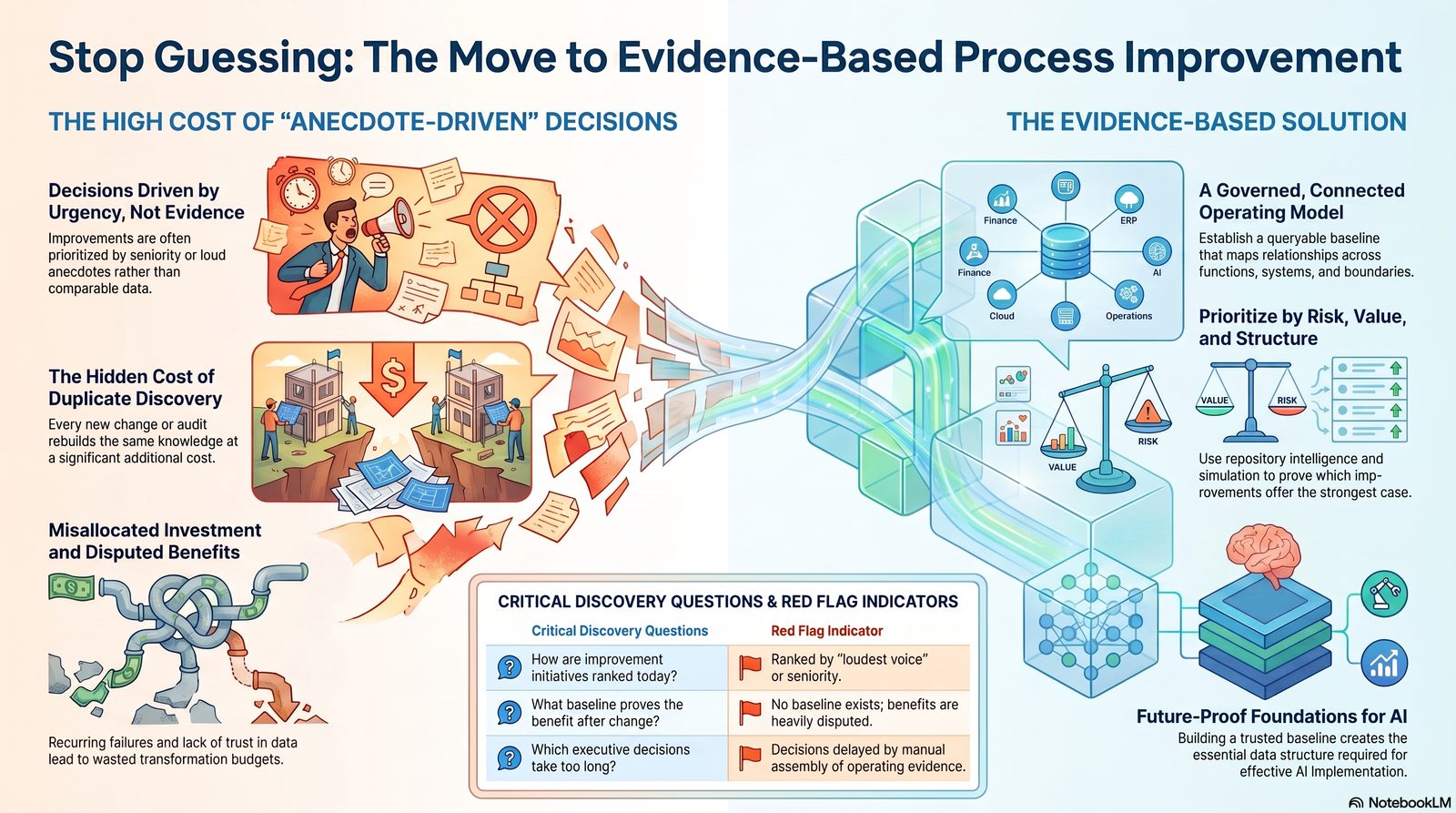
Prioritising Improvement by Evidence
Improvement backlogs work best when they are ranked on evidence. This episode covers how a queryable digital twin and simulation replace opinion, so benefits are demonstrated and each audit, incident or programme builds on shared knowledge.
-
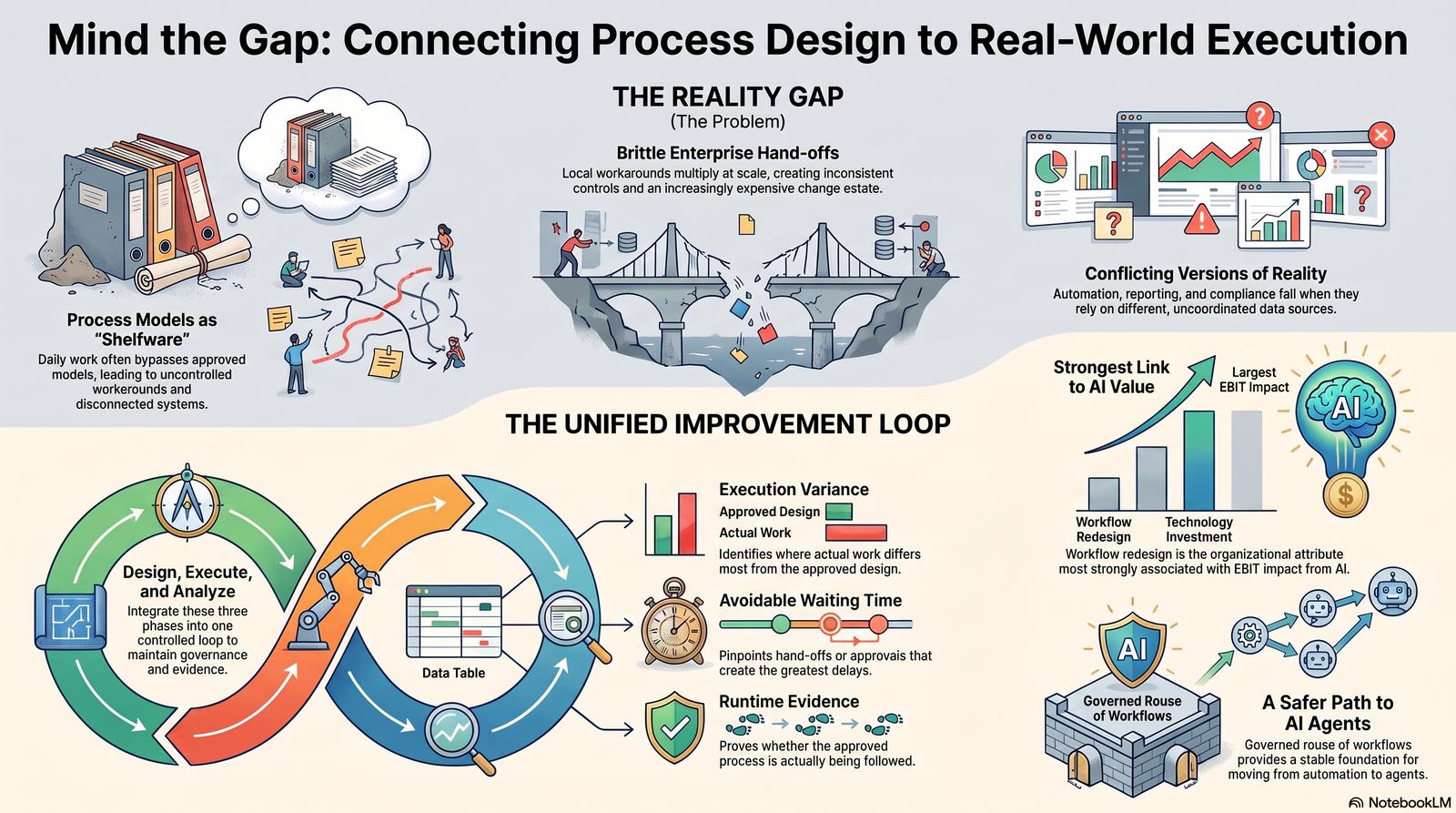
Getting Your Process Ready Before AI Automates It
Most AI programmes get added to a process that exists on paper, while real work runs through undocumented workarounds. This episode covers how to bring approved design and the running process together, so AI automates what you intend it to.
-
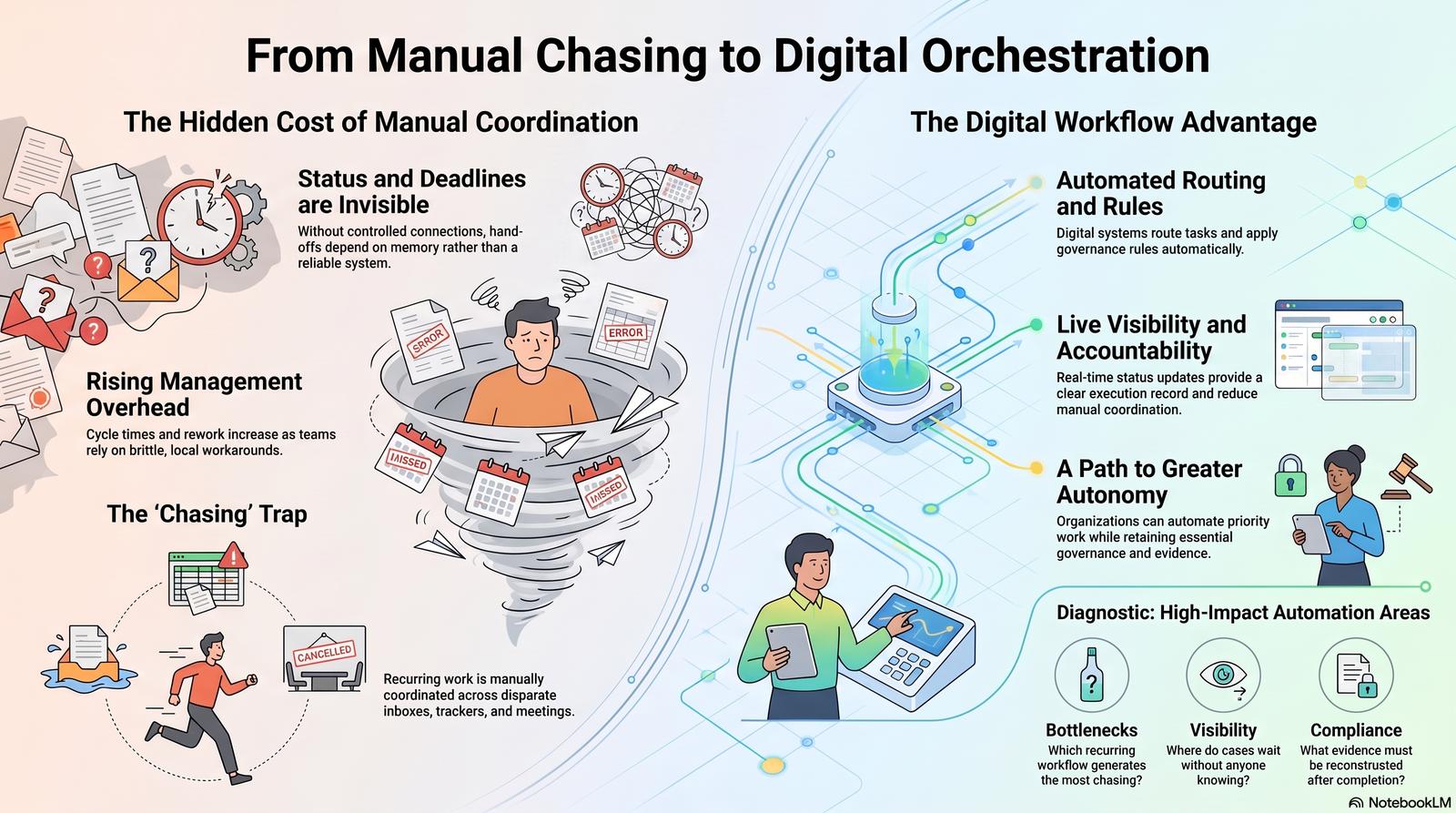
Moving Manual Coordination into Digital Workflows
People coordinate recurring work across inboxes, trackers and meetings. This episode covers how a governed digital workflow gives everyone live status, clear responsibility and an evidence record as work crosses team boundaries.
-
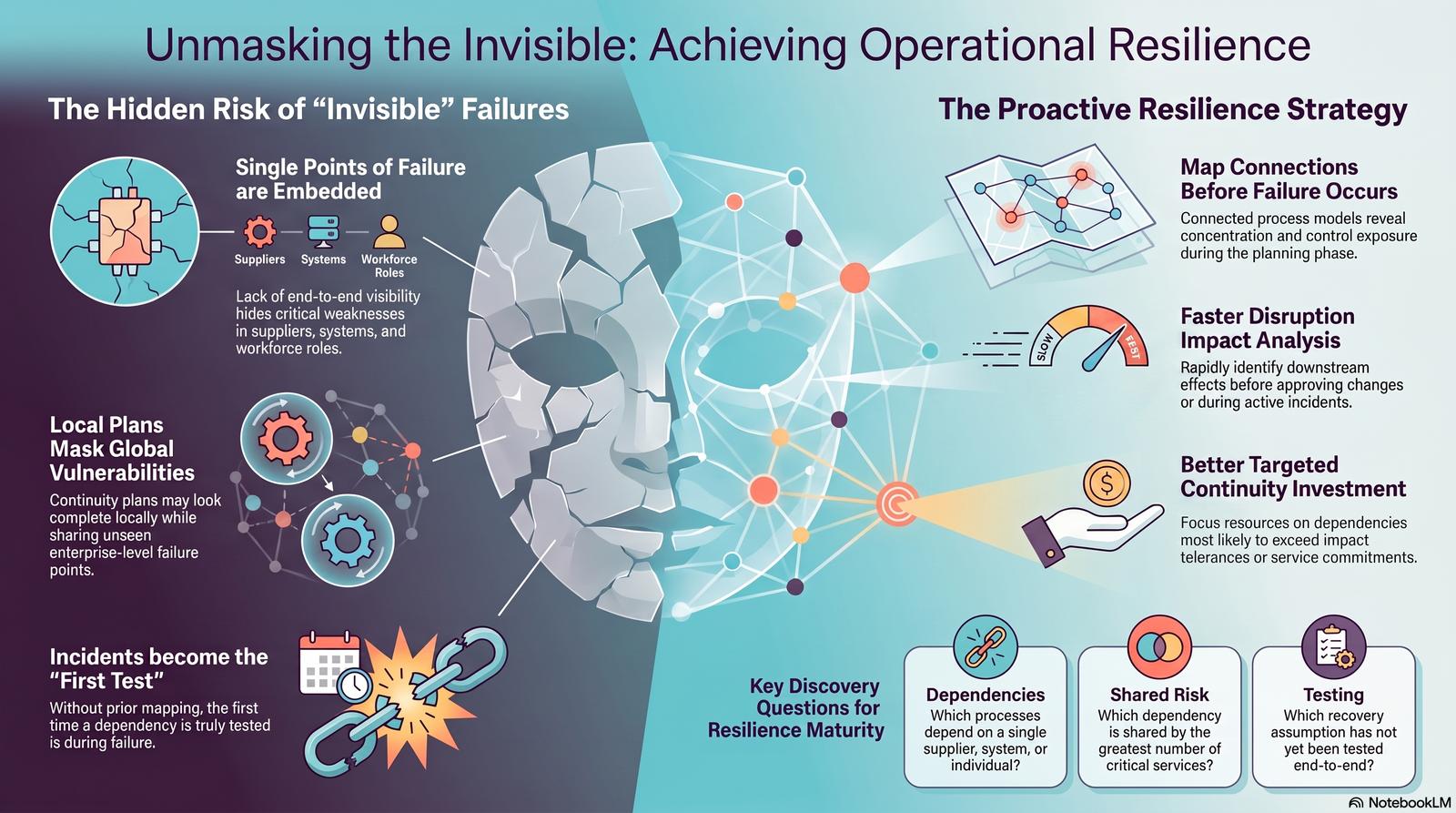
Mapping Single Points of Failure Before They Matter
Local continuity plans can all look complete while a single supplier, system or person that several critical services depend on stays invisible at enterprise level. This episode covers how a connected dependency map lets you strengthen resilience before a disruption tests it.
-
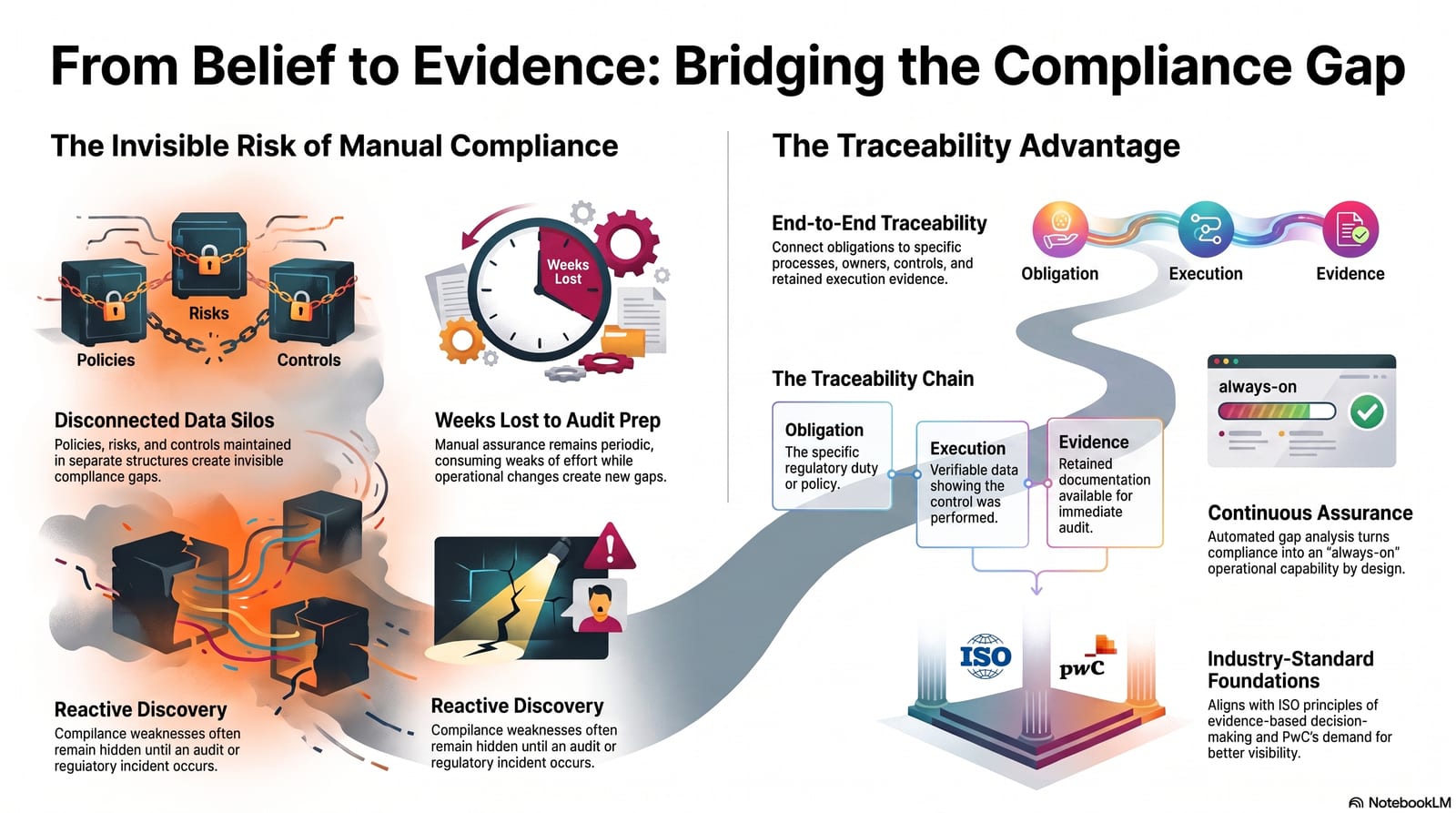
Proving You Are Compliant, Whenever You Are Asked
Believing you are compliant and being able to prove it are different things. This episode covers how traceability from obligation to evidence lets you show how a duty is met, and what that saves in audit-evidence hunts.
-
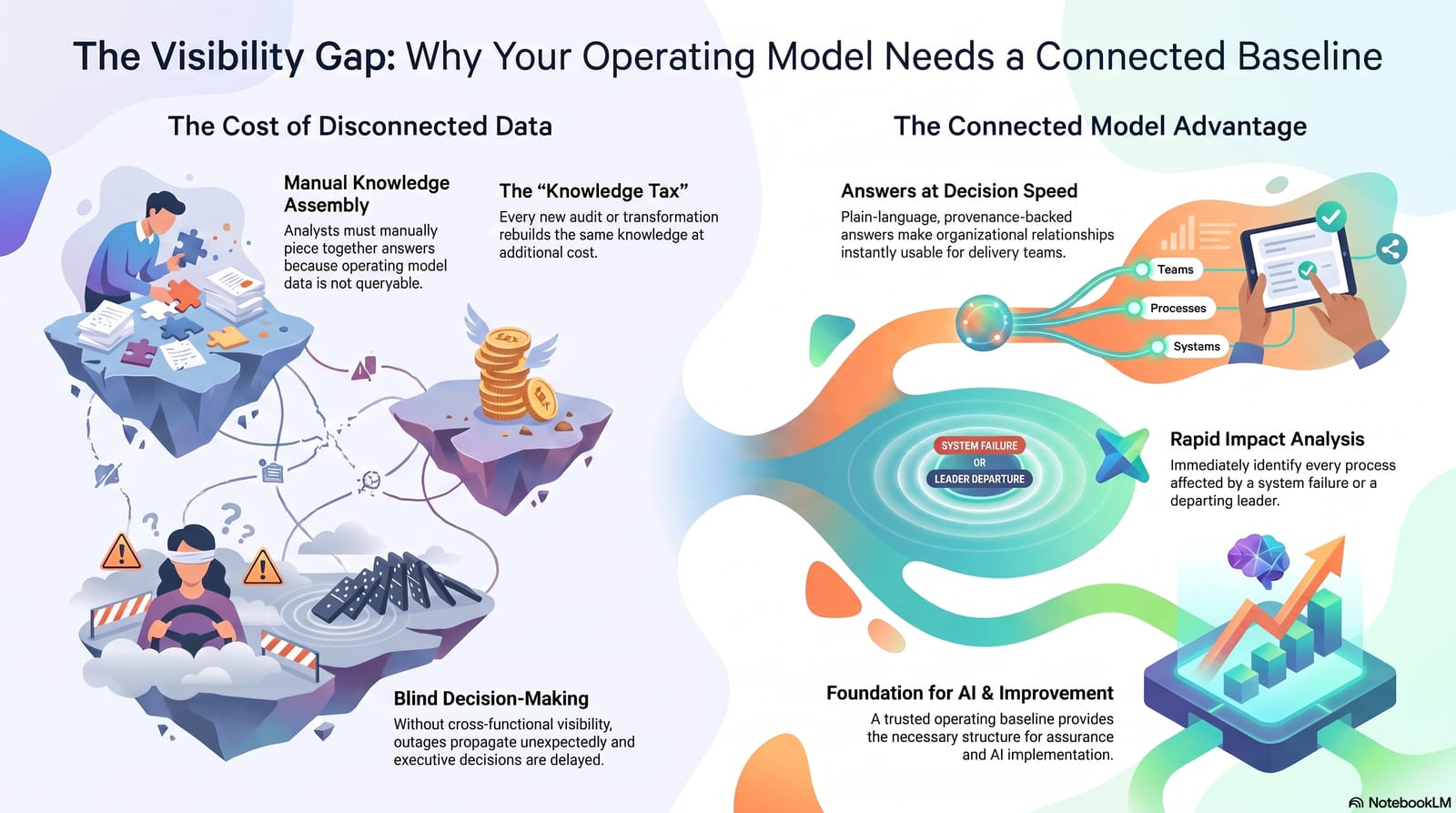
Seeing How Your Organisation Fits Together
Processes, roles, systems, risks and controls are usually all recorded somewhere. This episode covers how a connected, queryable baseline lets decisions cross functional boundaries with ownership and dependencies in view, and ends duplicate discovery.
-
Making Process Knowledge Trusted and Findable
Visio, SharePoint, SOPs, spreadsheets and people's memory hold the same answers in five places. This episode covers how a governed repository with repository intelligence brings them into one source you can trust.
-
Keeping Your Process Documentation Trusted
A process diagram is accurate on the day it is drawn, and stays useful when owners and dates are visible. This episode covers how a queryable operating baseline replaces duplicate discovery and keeps documentation trusted.
-
Specifications as the Durable Asset in the Age of AI Agents
Process maps assume execution can be scripted in advance, and agentic AI opens new possibilities. This episode sets out why specifications become the organisation's most durable asset once intelligent actors can plan and execute within governed boundaries.