Move work from email and spreadsheets into governed workflow
In your words: “Work is managed through email, spreadsheets and chasing”
- Workflow automation
- Digital workflow
- Manual-work elimination
People coordinate recurring work manually across inboxes, trackers and meetings. This becomes most visible when work crosses teams, approvals and systems while execution is coordinated outside the approved process model.
A digital workflow that follows the approved process makes status, responsibility and deadlines visible to everyone involved. Hand-offs stop depending on memory.
Cycle times shorten, rework falls and managers see progress without chasing. Every step leaves an evidence record.
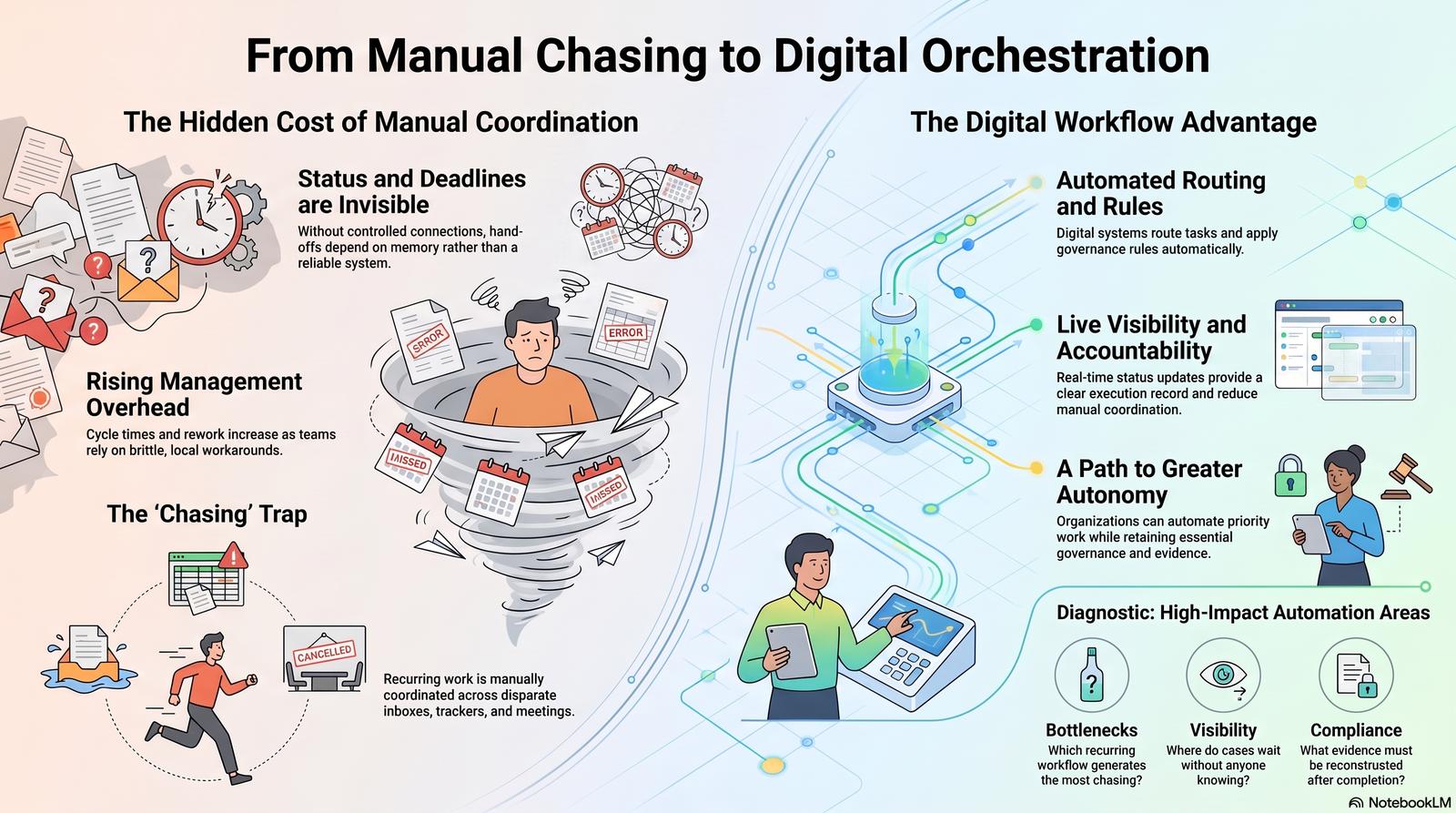
A digital workflow routes tasks, applies rules, captures evidence and provides live status. In practical terms, the organisation can automate priority work now while retaining governance, evidence and a deliberate path toward greater autonomy.
- Shorter cycle times, fewer missed hand-offs, clearer accountability and an automatic execution record
- Visible work status and accountability
- Reduced manual coordination and rework
- Governed reuse of workflows and controls
- A safer path from automation to agents
- Which recurring workflow generates the most chasing?
- Where do cases wait without anyone knowing?
- What evidence must be reconstructed after completion?
- Which hand-off or approval creates the greatest avoidable waiting time?
- What runtime evidence would demonstrate that the approved process is actually being followed?
Microsoft’s research reports sustained capacity pressure and high interruption volumes from email, meetings and chat, supporting the case for better workflow orchestration.
Microsoft: 2025 Work Trend Index
ISO explains that managed processes and their interactions support consistent results, performance evaluation and continual improvement through the process approach and PDCA cycle.
ISO: The process approach in ISO 9001